
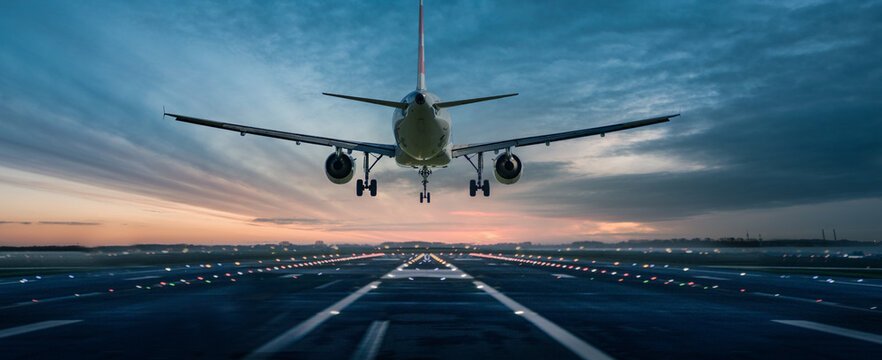
Aviation is entering an interesting new chapter. For decades, the industry focused mainly on making aircraft faster, larger and more efficient. Today, the conversation has become much broader. Airlines and airports are under growing pressure to reduce emissions, control costs and use technology to make flying smoother for passengers.
One of the biggest trends attracting attention in 2026 is sustainable aviation fuel (SAF).
Sustainable Fuel Moves Into the Spotlight
Unlike conventional jet fuel, sustainable aviation fuel can be produced from sources such as waste materials and other renewable feedstocks. It can be used in existing aircraft when blended according to current certification requirements, which makes it particularly interesting to airlines looking for ways to reduce the environmental impact of flying without waiting for an entirely new generation of aircraft.
The SAF market is also expanding rapidly, although production remains relatively small compared with the enormous amount of fuel consumed by commercial aviation. Recent industry analysis points to significant investment and growth in SAF production during the coming years.
The challenge is cost. Producing sustainable fuel is generally more expensive than producing conventional jet fuel, and airlines have to balance environmental targets with ticket prices and operating expenses.
Artificial Intelligence Is Changing Airline Operations
Sustainability is not the only major aviation trend. Artificial intelligence is increasingly becoming part of everyday airline operations.
Airlines are exploring AI for areas such as scheduling, customer service, maintenance planning and disruption management. The goal is not simply to make technology more impressive. It is to help airlines make faster decisions when weather, aircraft availability or airport congestion disrupts a normal schedule.
Industry research in 2026 shows that airlines are increasingly investing in AI while simultaneously dealing with higher operating costs and changing passenger demand.
For passengers, much of this technology may remain invisible. A traveler may simply notice that a delay is handled more efficiently or that an airline provides a more useful update about a disrupted flight.
Airports Are Becoming More Digital
The transformation is also happening on the ground.
Airports are adopting digital systems designed to improve passenger processing, baggage handling, security and airport operations. New technology is being developed to help airports deal with growing passenger numbers while making better use of existing infrastructure.
Advanced data systems can also help airports understand congestion and respond to operational problems before they become major disruptions. Technology trends highlighted for 2026 include greater use of digital tools, automation and infrastructure designed around sustainability.
The Fuel Problem Has Become Impossible to Ignore
Another major issue facing airlines is fuel cost.
Recent developments have demonstrated how quickly changes in energy prices can affect airline schedules. In September 2026, several major U.S. airlines announced reductions or adjustments to planned capacity following a sharp increase in fuel costs.
R
Reuters
This highlights an important reality about aviation: airlines operate in an industry where small changes in fuel prices can have enormous financial consequences.
More efficient aircraft can help, but airlines are also looking at alternative fuels, improved flight planning and newer technologies to reduce their dependence on conventional jet fuel.
What Will the Passenger Notice?
The aviation revolution will not necessarily arrive as one dramatic change.
Instead, passengers are likely to experience a collection of smaller improvements. Check-in may become increasingly automated. Airports may use more biometric and digital processes. Airlines may become better at predicting disruptions. New aircraft designs can improve fuel efficiency, while SAF could gradually become a larger part of the industry's fuel mix.
At the same time, passengers may continue to face familiar problems such as delays, crowded airports and fluctuating ticket prices.
That is because aviation is balancing several difficult goals at once: growing demand for air Travel, environmental responsibility, technological investment and financial sustainability.
A New Era for Aviation
The aviation industry is no longer simply asking how many people it can put on an aircraft. It is increasingly asking how those passengers can be transported more efficiently and with a smaller environmental footprint.
Sustainable aviation fuel, artificial intelligence, modern aircraft and smarter airports are all pieces of that larger puzzle.
The transition will not happen overnight. SAF still faces production and cost challenges, while new technologies require substantial investment and infrastructure. But the direction of the industry is becoming clearer: the future of aviation will be shaped as much by sustainability and digital technology as by the aircraft themselves.
For travelers, that could eventually mean a flying experience that is cleaner, more connected and more responsive to their needs—without changing the simple reason people continue to board airplanes: getting somewhere that would otherwise be far away.
This is written from scratch rather than copied from a source. If you publish it commercially, I’d recommend adding your own examples, images, and author perspective to make it even more distinctive.